
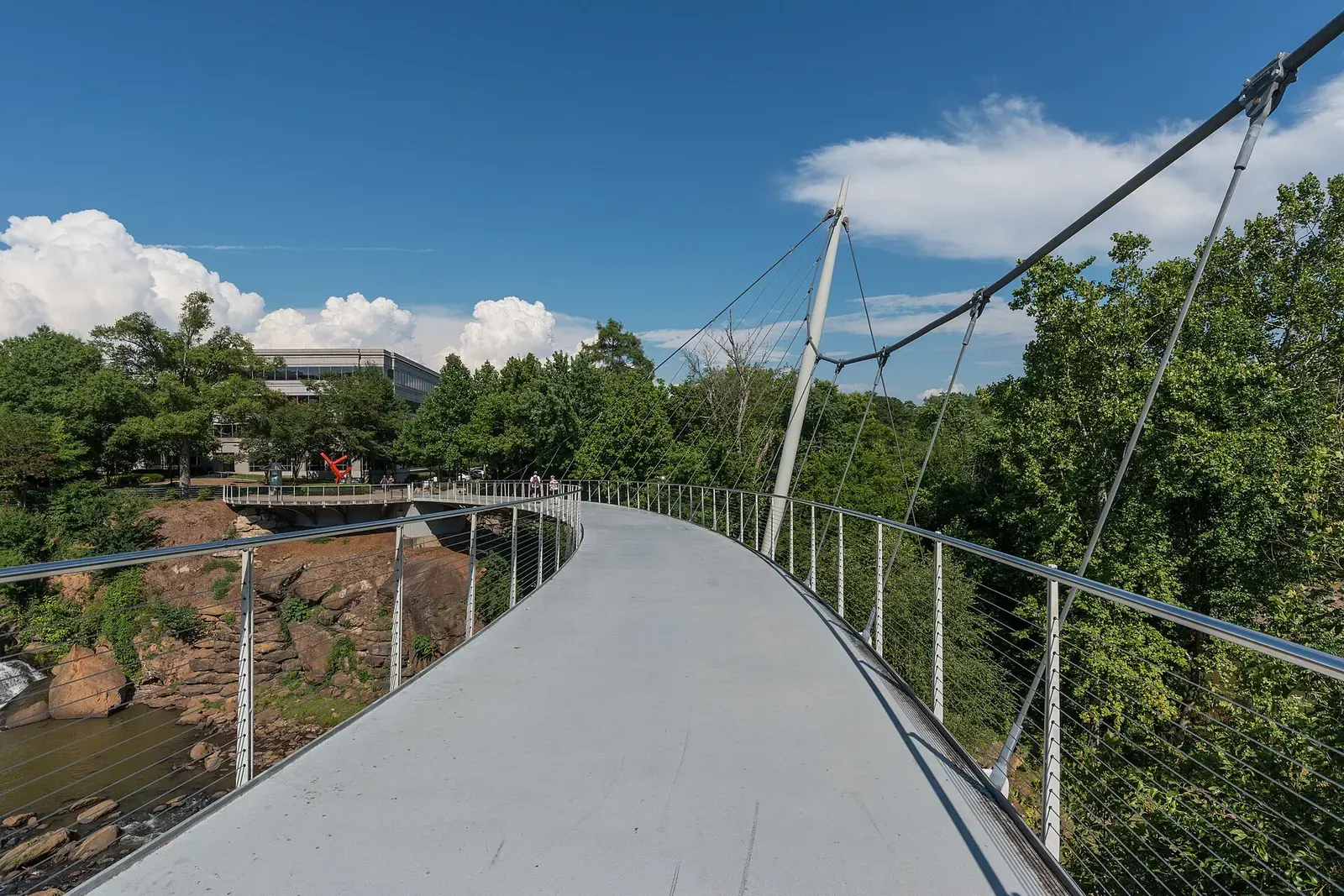

The water is very soft
Greenville Water says its water is "very soft," with total hardness averaging under 1 grain per gallon (Greenville Water). It draws from three sources: Table Rock Reservoir, North Saluda Reservoir and Lake Keowee (Greenville Water).
What that means for you: hard-water scale, the white crust that kills water heaters in other parts of the country, is not the usual story here. So if a plumber pushes a water softener on a house with Greenville Water, ask what they expect it to fix. (That's our reading of the numbers, not a rule.)
One thing worth knowing: Greenville Water disinfects with chloramines, and its own FAQ notes that "rubber linings of water lines may disintegrate over a period of time" (Greenville Water FAQ). If you have old rubber hoses or toilet parts that have gone soft, mention it to the plumber.
Mill villages and historic streets
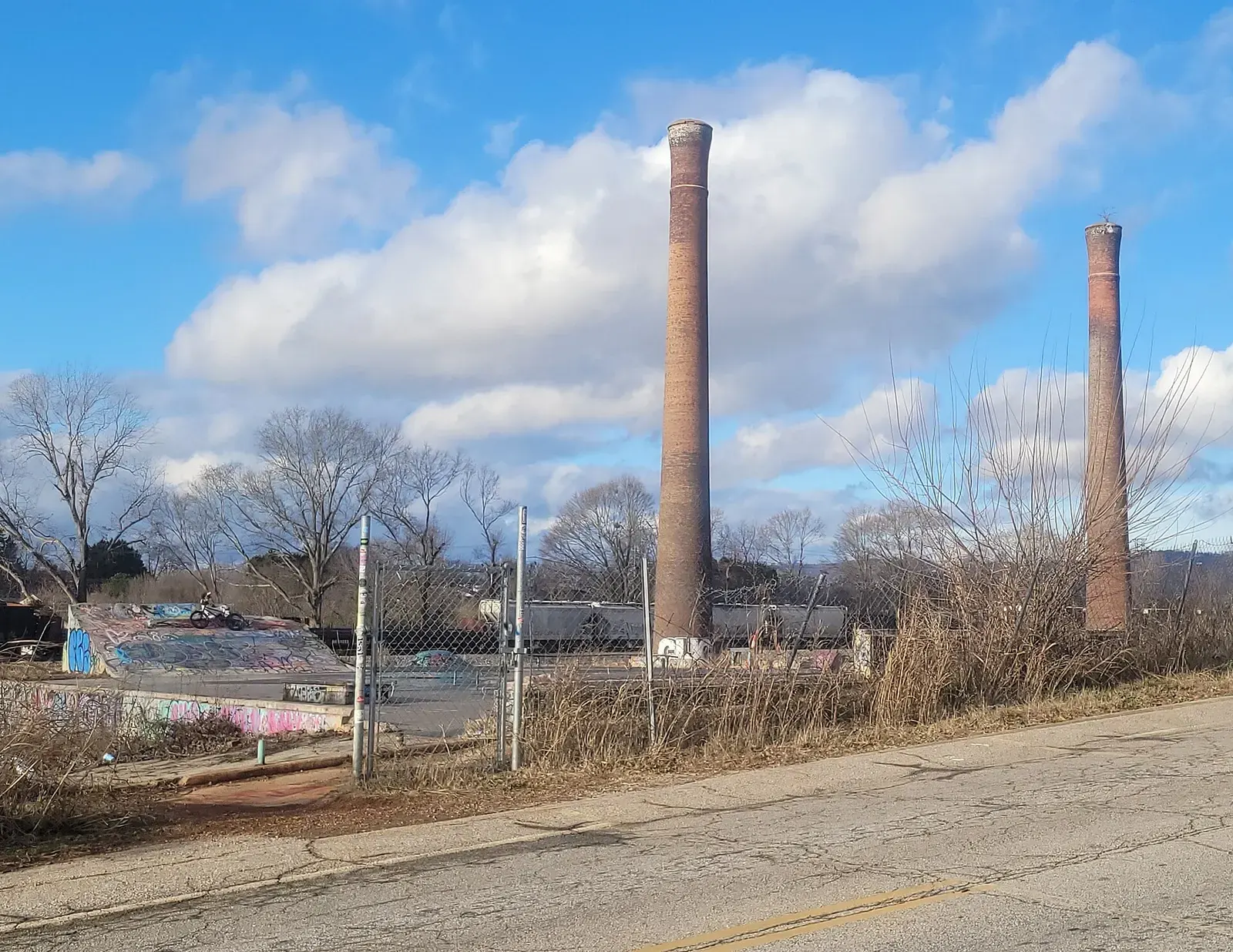
Greenville was one of the country's big textile towns. Most of its mills date from the late 1800s into the early 1900s, and the industry declined in the mid- to late 20th century (Post and Courier). The Poe Mill started in 1896 (Wikipedia). The mills owned the houses around them, along with schools, churches and stores (Greenville Journal).
We can't tell you how any one house was plumbed. But the streets around old mills and the historic districts near downtown are where the oldest houses are. About 19% of homes in the city were built before 1960 (Census Reporter, ACS 2024). The median home in the city was built in 1988, so the older ones stand out.
Galvanized pipe and cast iron
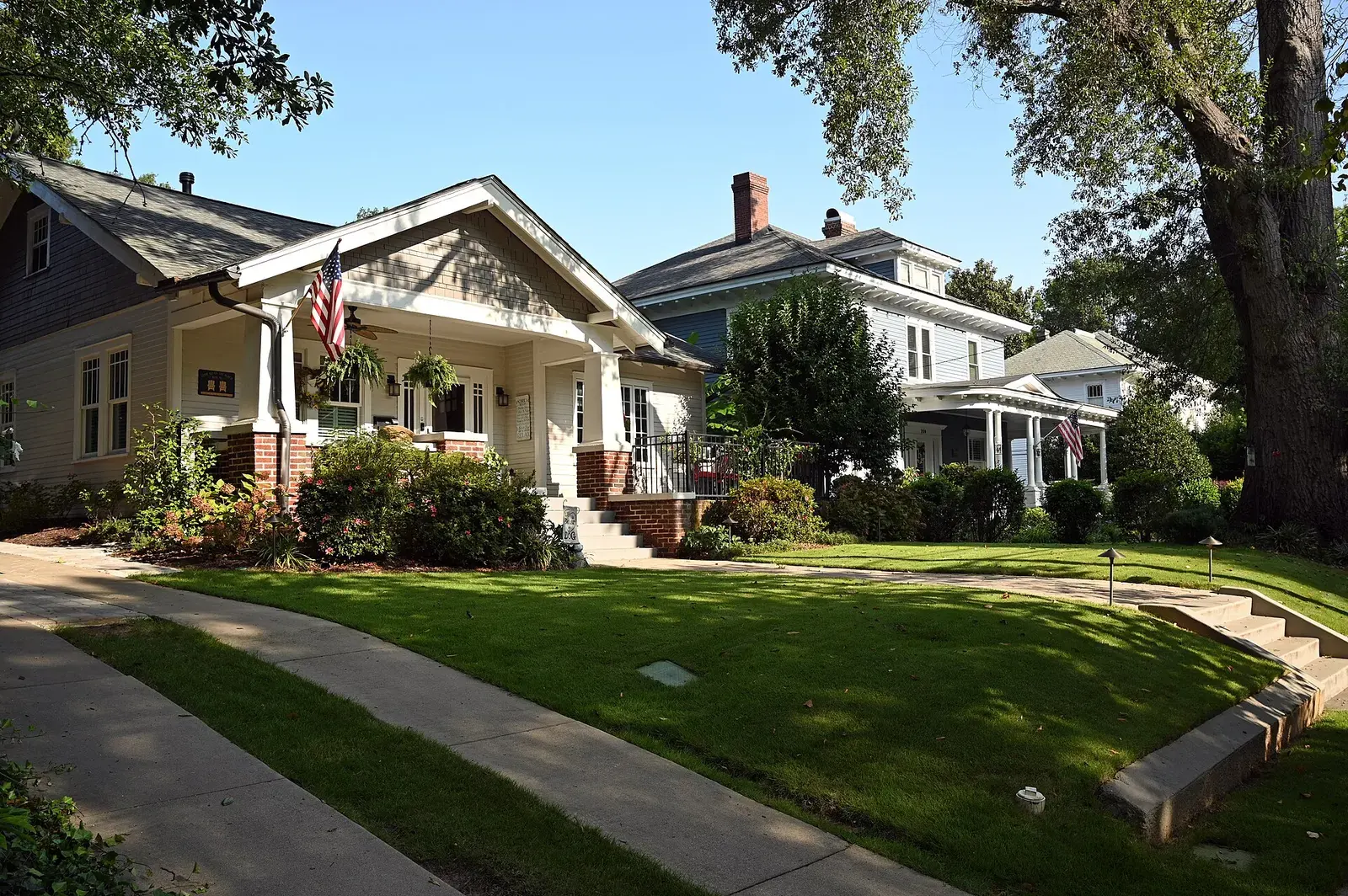
Galvanized steel supply pipe was used in homes until about the 1960s. If it's still in the house, it's probably near the end of its life. The usual signs are low water pressure and leaks, often at the threads (Nations Home Inspections).
Cast-iron drains were common in older homes (many homes built before the 1970s still have them) and typically last 50 to 100 years (Hale Home Services). A slow drain that keeps coming back in an old house can be a worn drain line and not just a clog.
When you call, give the plumber the year the house was built, and say if you know what the pipes are made of. It saves a trip. Here are the price ranges.
Red clay
Cecil soil, with a red clay subsoil, is mapped across the Piedmont, including South Carolina (Wikipedia: Cecil soil). A foundation company that works in Greenville says the clay swells and shrinks with wet and dry cycles and moves footings and slabs over the years (Carolina Foundation Solutions). Our reading: a drain that gets worse over time and doesn't clear can be worth a camera look.
Cold snaps
January lows average 35°F (Weather Spark). Most winters it's fine. Then a hard freeze comes, like the Christmas 2022 one that broke pipes across the South (NPR). Greenville Water's tips: know where your master shutoff is, let faucets drip, insulate pipes, open cabinet doors under sinks, and disconnect outdoor hoses (Greenville Water).
Well and septic, out past the city
Not every home in the county uses city water and sewer. If yours has a well or a septic tank, say so when you call. Work on a septic system has its own rules, separate from ordinary plumbing; the state's Department of Environmental Services (SCDES) has a homeowner page (SCDES).
What to tell the plumber
- About when the house was built, and the street or neighborhood.
- Whether you're on city water and sewer, or a well or septic.
- Where the main shutoff is, or that you can't find it.
- What you see: a leak, a stain, low pressure, a slow drain, or no hot water.
Then ask for their license number and check it at the SC LLR license lookup.